


What is the Difference Between a Project Schedule and a Project Plan?
What is the Difference Between a Project Schedule and a Project Plan?
Most construction professionals have used both terms throughout their careers — often interchangeably. But understanding the distinction between them is one of the most fundamental shifts a project team can make.
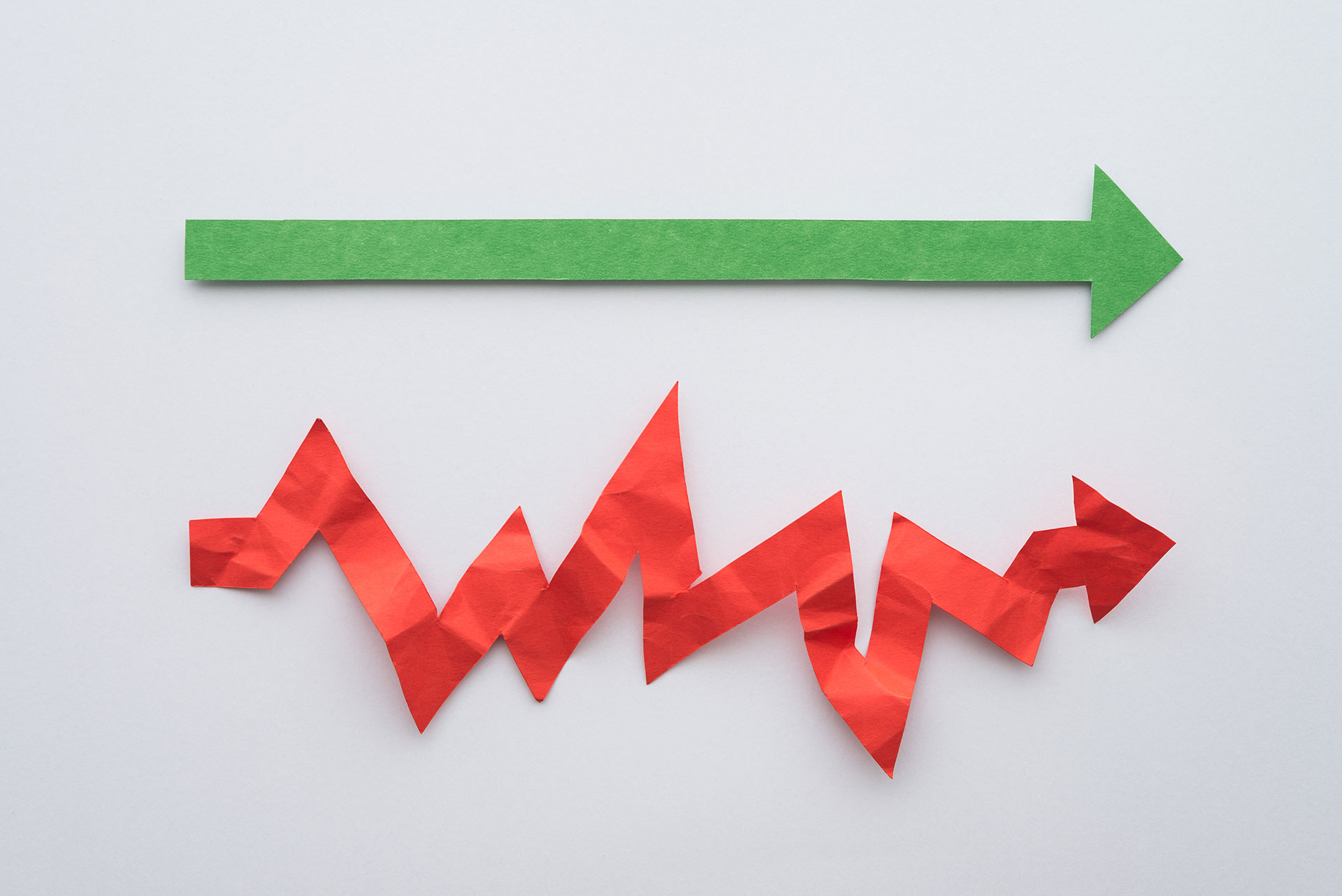
A schedule is a time-based representation of activities, sequences, and durations. A plan is a living system of decisions, assumptions, constraints, and accountabilities. One tells you what is supposed to happen and when. The other tells you how, by whom, and under what conditions it will actually be delivered. A project can have a perfectly structured schedule and still be completely out of control.
This distinction becomes most visible when we examine how top-performing project teams manage their planning horizons — the rolling windows of future work that are actively controlled and de-risked. Three horizons must operate simultaneously: the master schedule (strategic, 12–24 months), the lookahead schedule (tactical, 4–6 weeks), and the daily work plan (operational, 1–3 days).
When these layers fall out of sync — when site teams execute daily tasks disconnected from the project's critical path — the result is schedule drift: a quiet, gradual erosion of float that rarely announces itself until it becomes a crisis.
The Last Planner System (LPS) was developed to close this gap. By tracking Percent Plan Complete (PPC) weekly and running structured root-cause analysis on missed commitments, it transforms scheduling from a top-down reporting exercise into a team-owned commitment system — consistently delivering 15–25% improvements in schedule reliability on complex projects.
________________________________________
Constraint Management is Where the Real Work Happens
The lookahead schedule only delivers value when treated as an active constraint removal tool — not a passive tracking layer. Every activity approaching the execution window must be stress-tested: Is design information released and approved? Are materials confirmed for delivery? Is preceding work physically complete? In practice, 60–70% of plan failures trace back to constraints that were visible weeks in advance but never formally owned or resolved. A weekly constraint log with named owners is one of the highest-return habits any project team can build.
________________________________________
PPC is a Leading Indicator, not a Lagging One
Most teams use PPC to reflect on past performance. The more powerful application is forward-looking. Consistent PPC below 70% is not just a productivity signal — it points to deeper systemic issues: unclear scope handoffs, design information lag, supervision gaps, or subcontractor financial stress. Catching that trend early enables intervention weeks before any delay surfaces on the master schedule — and long before it becomes a contractual issue.

________________________________________
The Readiness Review: Turning Planning into a Gate, not a Formality
One of the most effective — and rarely implemented — tools in advanced construction planning is the Readiness Review: a structured, recurring assessment conducted four to six weeks before any major work package or phase transition begins. Unlike a standard progress meeting, a Readiness Review is not a backward-looking exercise. It is explicitly forward-facing, asking one question: Is this project genuinely ready to execute the next phase, or are we assuming readiness because the dates on the schedule say we are?
A well-facilitated Readiness Review examines procurement status, design freeze confirmations, permit and authority approvals, site logistics, resource mobilization, and interface risks with adjacent packages. The output is not a status report — it is a readiness verdict with a defined resolution path for every open item. Teams that institutionalize this practice consistently avoid the most common cause of phase-transition failures: the assumption that because planning is complete, execution is ready.
________________________________________
The Plan Must Reflect Reality — Not the Reality You Wish You Had
Perhaps the most important and most difficult principle in advanced planning is planning honestly, the discipline of building schedules and plans that reflect the actual conditions of the project, rather than the conditions required to meet a contractual date.
Optimism bias is well-documented in construction planning. Teams routinely underestimate activity durations, overestimate resource productivity, and build schedules with zero contingency because acknowledging risk feels like admitting defeat. The result is a baseline that is technically complete but practically unachievable — a plan that begins eroding on Day 1 and creates a culture of permanent catch-up.
Experienced project managers counter this through probabilistic scheduling techniques such as Monte Carlo simulation, which model the range of possible outcomes across thousands of scenarios rather than committing to a single deterministic path. When a Monte Carlo analysis shows a P80 completion date — the date by which there is an 80% probability of finishing — that is the date a credible baseline should be built around, not the P20. The difference between those two dates is not pessimism. It is the realistic contingency that separates projects that finish on time from projects that explain why they didn't.
________________________________________
Understanding the difference between a schedule and a plan is not a theoretical exercise. It is the foundation of how disciplined project teams think, communicate, and deliver.
DAR Engineering’s Project Management services are designed to bring this level of sophisticated control to your projects. Our dynamic team of certified professionals ensures that both technological and operational expertise remain current and effective. From rigorous contract administration to on-site health and safety oversight, our PM services provide the authoritative leadership required to successfully navigate tight delivery schedules and complex stakeholder environments.
Does your current project have a schedule — or does it have a plan?