

Unmovable Deadlines: The Executive Playbook for Fast-Track Mega-Project Delivery
Imagine this: The world is watching, the launch date is set, and international media is descending. In traditional commercial real estate, a three-month construction delay means a temporary loss of rental revenue and extended carrying costs. But when delivering iconic, multi-billion-dollar mega-projects tied to global events or strict operational mandates, a three-month delay is a catastrophic reputational and financial crisis.
The opening date is an absolute, there is no extension, and the schedule cannot move.
Delivering a multi-billion-dollar megastructure on a fast-track timeline requires abandoning traditional linear construction entirely. For C-level executives and investors, it demands proactive risk mitigation, supply chain dominance, and digital-first engineering to protect the project's CapEx and guarantee the handover.
Parallel Execution: Decoupling the Critical Path
Traditional construction relies on a linear path—you must finish phase A before starting phase B. Fast-track mega-project delivery requires parallel execution. To compress the schedule, developers must utilize massive off-site manufacturing and modular prefabrication.
While heavy concrete foundations are being poured on-site, complex structural steel and modular MEP (Mechanical, Electrical, and Plumbing) skids are prefabricated in controlled factory environments. By shifting thousands of labor hours off-site, developers drastically reduce site congestion, increase quality control, and shave critical months off the delivery schedule.
Supply Chain Resilience and Early Procurement
The greatest external threat to a fast-track schedule is global supply chain volatility. Waiting for 100% completed architectural blueprints to order materials is a recipe for catastrophic delays.
Mitigating this risk requires transitioning to an "Early Works" procurement model. By securing long-lead items - such as high-voltage transformers, specialized glazing, and structural steel - months in advance, developers insulate the project schedule from global market fluctuations and ensure materials are on-site exactly when the contractor needs them.

The Digital Twin as Financial Insurance
Rework is the enemy of the fast-track schedule. Discovering that high-capacity chilled water mains clash with a primary structural beam on the physical site destroys contingency budgets and halts progress.
Implementing a strict "Zero-Rework Mandate" using 6D Building Information Modeling (BIM) is no longer just an engineering best practice; it is financial insurance. Every clash is resolved in the digital twin long before construction begins, guaranteeing that when physical installation starts, it is executed perfectly the first time.
The Executive Playbook: 3 Steps to De-Risk the Critical Path
Technology alone cannot save a fast-track schedule; it must be paired with aggressive project management. To truly protect the CapEx and timeline, developers must implement these three operational steps:
1. Mandate a Hard "Design Freeze" (Front-Loaded Engineering): Scope creep is fatal to a fast-track schedule. Developers must enforce a strict design freeze early in the schematic phase. Once the core geometry and structural grids are locked, aesthetic changes cannot be allowed if they impact the MEP or structural critical path. A disciplined design freeze protects the procurement pipeline and prevents cascading delays.
2. Implement the "Big Room" Co-Location Strategy: Traditional approval processes - where Request for Information (RFI) submissions take weeks to process - will destroy a fast-track timeline. The solution is co-location. The developer, lead architect, structural engineer, and prime contractor must operate in a unified physical (or digital) "Big Room." This hyper-collaborative environment reduces RFI resolutions and design approvals from weeks to mere hours.
3. Utilize Progressive Contracting Models: Traditional "Design-Bid-Build" lump-sum contracts are fundamentally too slow for modern megaprojects. C-level investors should utilize Construction Management at Risk (CMAR) or Progressive Design-Build models. This legal structure allows the contractor to begin pouring foundations while the final architectural finishes are still being designed, aligning all parties' financial incentives around the unmovable final delivery date.
Continuous Commissioning vs. The Final Bottleneck
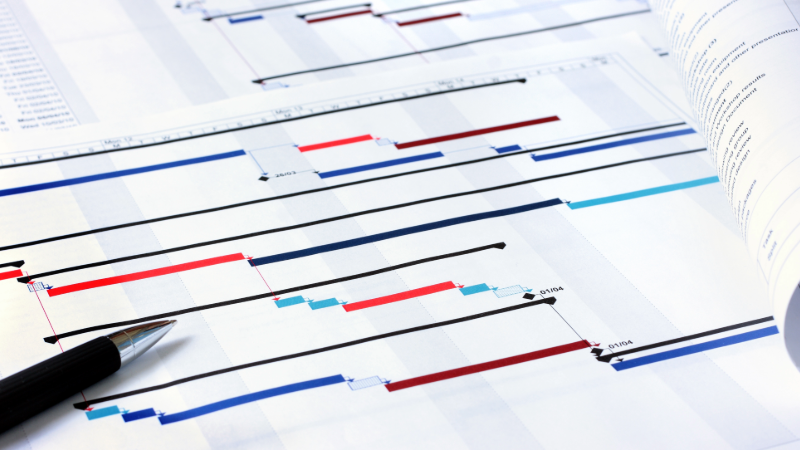
Waiting until a megastructure is 100% built to test life-safety, operational, and climate control systems creates a massive, high-risk bottleneck in the final months of the project.
The operational solution is Continuous Commissioning. Engineering teams must test, certify, and sign off on segmented zones of the building as they are built. This flattens the testing curve and ensures a smooth, predictable handover, allowing asset operators to begin staff training and system simulations months earlier.
Promising a fast-track delivery is easy; engineering the risk out of it is the true challenge. At DAR Engineering, we act as strategic project guardians. By integrating elite BIM coordination, proactive supply chain strategies, and rigorous project controls, we provide developers and investors with the absolute certainty that their capital is protected, and their landmark asset will be ready when the world is watching.